Look, I know. You’d probably rather just show up in a hoodie and tell everyone you’re dressed as yourself on Monday. Not this time. The good news is that guys have it easier on Halloween than they think, because you don’t need to know how to sew or paint, and you don’t need to look like you stepped off the cover of “Vogue.” What counts is the idea and the fact that you bothered at all. There’s only one rule: if you’re going to dress up, go all in. A half-hearted Dracula is just a guy in a cape, so stay in character longer than until your first beer. And since we’re talking about Dracula, let’s start with him, because everything started with him.
Bram Stoker’s novel came out in 1897, and the writer borrowed the count’s name from Vlad the Impaler, the cruel ruler of Wallachia. Cinema loved Dracula right away, though not always legally. The German “Nosferatu: A Symphony of Horror” from 1922 was an unauthorized adaptation of the novel; Stoker’s widow won the lawsuit, and the court ordered the film copies destroyed. A few luckily survived, and in 2024 Robert Eggers made a new “Nosferatu” with Bill Skarsgård. The look everyone associates with him was cemented by Bela Lugosi in “Dracula” from 1931: slicked-back hair, a cape, and manners like a five-star hotel waiter. Lugosi became so identified with the role that he was buried in the count’s cape. After him came Christopher Lee in Hammer horror films and Gary Oldman in “Bram Stoker’s Dracula,” whose costumes Eiko Ishioka designed, winning an Oscar for them. My colleague told you about the villa on Lake Geneva. That is exactly where the elegant vampire comes from. At the same contest, Byron’s doctor, John Polidori, took an idea Byron had abandoned and turned it into the story “The Vampyre,” whose protagonist, a pale and seductive lord, looks exactly how cinema loved him a hundred years later. And if someone tells you vampires are an American import, remind them about the Slavic strzyga and upiór, vampire-like creatures from Polish folklore. The Witcher didn’t fight pumpkins, after all.
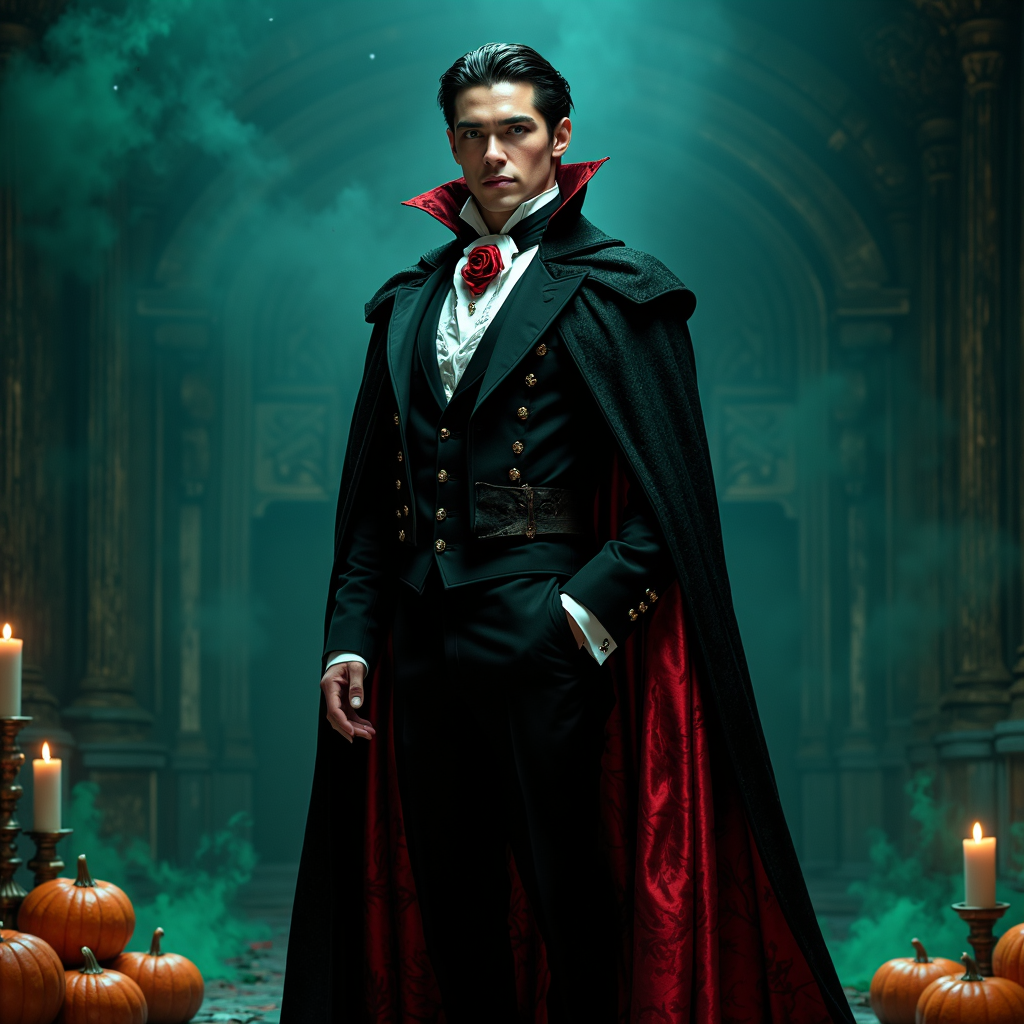
Dracula doesn’t run around like a maniac, he glides. He has slow movements, an upright posture, and a gaze that gives you chills, plus a tailcoat, waistcoat, jabot, and a cape with a red lining. You can make the cape from an old black curtain, a duvet cover, or a flared skirt, and don’t laugh, because you fasten the waistband under your chin and no one will notice. You can sew or glue the lining from an old red pillowcase. The most important thing is the high collar, which supposedly originated in the theater. In the stage version from the 1920s, it hid the back of the actor’s head so he could sneak out of the cape through a trapdoor, and the audience thought the count had vanished into thin air. You’ll cut your collar from cardboard or a plastic document folder, cover it with fabric, red on the inside, and attach it to the cape with a stapler. It has to stand on its own, otherwise you look like a duck. You’ll fasten the cape with two large buttons and a piece of chain from an old handbag. Take the tailcoat and waistcoat from a suit that remembers your studniówka (Polish high school prom) or your cousin’s wedding, and arrange the jabot under your neck from a white handkerchief or a piece of lace, fastening it with a brooch made from a bottle cap painted with red nail polish.
Slick your hair back with a lot of gel. Powder one shade lighter than your skin will make you pale as a basement wall, and a bit of gray shadow under your eyes and cheekbones adds aristocratic fatigue. Fangs are optional. Cheap plastic ones look great in photos and terrible in conversation, so keep them in your pocket for the photo session. Instead, learn one line from 1931, “I never drink… wine,” and say it slowly, with a pause, looking the person in the eyes. For photos, light from below is enough, i.e., a phone flashlight held at chest height. You can pull this off for PLN 20, and if you have an old suit, you won’t spend a cent.