A Halloween Party on a Shoestring

By late October, clubs are bursting at the seams with zombies and witches, and in every other apartment someone is planning a costume party. Not long ago, nobody would have believed this. Halloween came to us from cinema and television. First, we watched Elliott from “E.T.” sneak the alien out of a house dressed as a ghost, then came “Hocus Pocus” and American TV series, and only then did plastic pumpkins appear in stores. The holiday itself is much older than cinema. The name comes from All Hallows' Eve, the eve of All Saints’ Day, and its roots go back to Celtic Samhain, when summer was bid farewell and ghosts supposedly had an easier time reaching the earth. The Irish and Scots brought this custom to America, Americans turned it into a spectacle, and we got it as a package deal with popcorn. Anyone who thinks it’s foreign should remember Dziady (Mickiewicz’s dramatic poem about ancestral spirits). Its line “Darkness everywhere, silence everywhere, what will happen, what will happen?” sounds like the start of a good horror movie, and you can go to a party on Friday and on Sunday light a znicz (a memorial candle).

A good costume doesn’t have to come from a store. The best ones are made in the hallway, from things that should have gone to the clothing donation bin long ago: an old bedsheet, a flannel shirt from your dad, a curtain from your grandmother’s wardrobe, and jeans that already had a hole anyway. From the kitchen, tea and coffee are useful for aging fabrics, while honey, food coloring, and cocoa are enough for a quite convincing fake blood. The rest is handled by the makeup bag, where almost every one of us has eyeliner, a few eyeshadows, and dark lipstick. What’s missing is worth looking for in a lumpeks (second-hand shop), because a jacket with long tails or work overalls cost less there than a single mask from a supermarket.

We picked eight characters, each from a film worth knowing, and added a few fun facts for the party. But before you start, remember it’s late October. Your costume has to survive the trip from the bus stop and look good under your coat, otherwise you’ll look like a clown at midnight on the bus stop. Test new face paint on a patch of skin the day before, wear colored contact lenses only after a visit to the optician, and keep capes, veils, and lace away from fire, preferably using battery-operated candles. The mask must provide good visibility and allow easy breathing, so take it off on stairs or when driving. Props that look like weapons, even plastic ones, should stay at home, because you want to scare party guests, not the police on the way. Our colleague, who has been dressing up for Halloween for years, will present the styling tips for women. A colleague who resisted for a long time but finally gave in will advise the men.

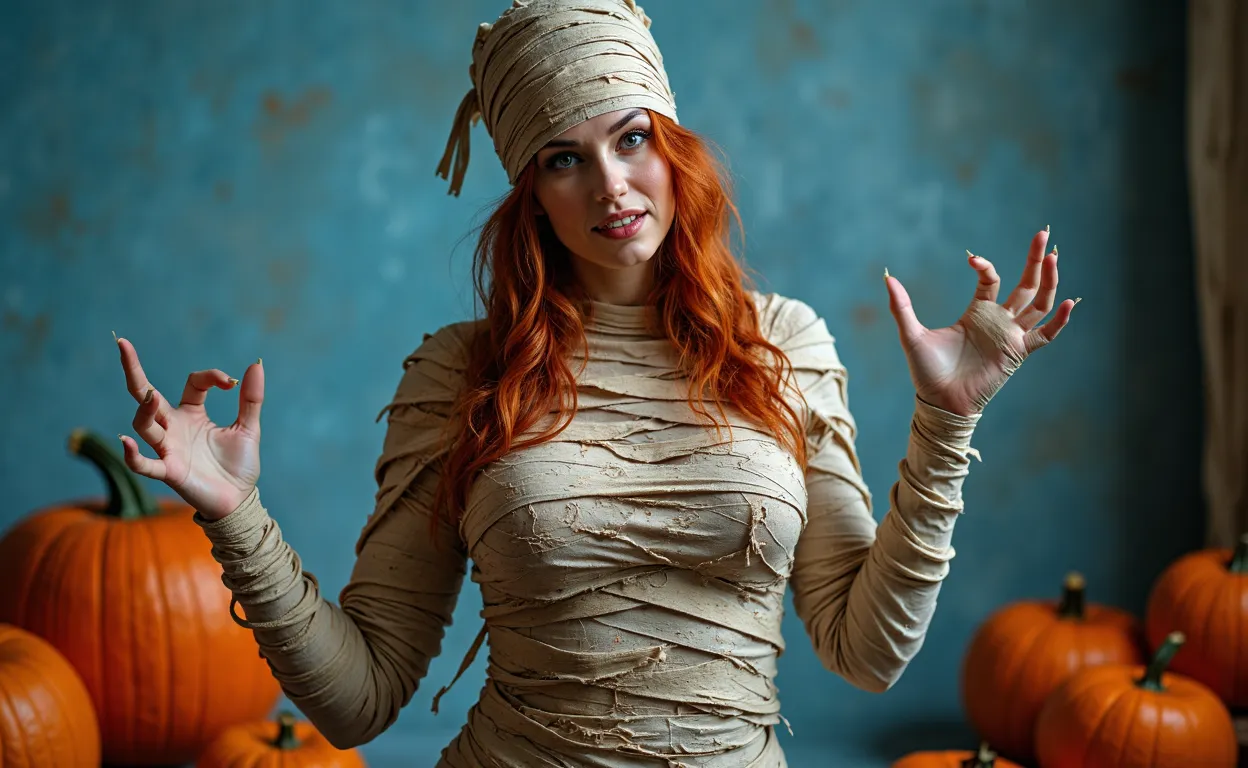
The Mummy, or a lady who took a very long nap

Dear, sit down and pour yourself a cup of tea. I’ve been dressing up for Halloween for years, and I still remember when people thought pumpkins were only good for soup. Over the years, I’ve learned a few things. The best costumes are made from clothes you don’t mind ruining, because if you’re worried about your favorite dress, you’re not having fun, you’re just stressing out. Makeup does the heavy lifting, and the outfit is just there to support it. And before you leave the house, think about how you’ll use the bathroom in that costume, because even the best mummy needs to… well, you know. We’ll start with the mummy, by the way, because it’s the easiest costume of the four.

The first movie mummy rose from its sarcophagus in 1932. Boris Karloff played Imhotep, an Egyptian priest who was accidentally awakened, and the makeup for the bandaged scenes reportedly took eight hours. Most of us, however, know “The Mummy” from 1999, the adventure film with Brendan Fraser and Rachel Weisz, full of sand, scarabs, and humor, which still holds up well. In the 2017 version, the one with Tom Cruise, the mummy is finally a woman, Princess Ahmanet played by Sofia Boutella, and that’s good, because bandages deserved some sparkle. Fascination with mummies didn’t start in cinema, either. In nineteenth-century England, tickets were sold for shows where a doctor unwrapped layers of linen in front of an audience, and painters used a paint called mummy brown for years, made literally from ground-up mummies. You could still buy it in the twentieth century.

Our mummy doesn’t scare anyone. She’s an Egyptian lady after a nap lasting several thousand years, in a dress made of bandages, with a golden collar around her neck and eyeliner like the frescoes in the Valley of the Kings. You can make the bandages from an old bedsheet or a few worn-out T-shirts that you need to tear into strips five to eight centimeters wide. Tear, not cut, because the frayed edges immediately look like they’ve been lying around for a thousand years. Throw the strips into strong tea or coffee for half an hour, squeeze them out, crumple them into a ball, and dry them on the radiator. Each one will come out in a different shade of beige, and that’s exactly the point.

Don’t wrap the bandages on bare skin. First, put on a fitted dress or leggings and a top in a skin-tone color, and on a cold evening, you can fit thermal leggings underneath. Only then wrap the strips around this base and pin their ends with safety pins, leaving a few hanging loose, because they add to the effect. One long strip wrapped into a turban will handle the head. You can cut the golden collar from cardboard in a crescent shape, paint it with gold paint, or cover it with gold foil from chocolate wrappers, and decorate it with beads from a dismantled necklace. Add a long eyeliner line, gold eyeshadow, a touch of bronzer under the cheekbones, and caramel-colored lips. The whole thing usually costs nothing, and with gauze and gold paint, it’s at most PLN 20. One final tip: wrap yourself so that one part of the costume can be removed without unwrapping the entire mummy. You’ll thank me around midnight.

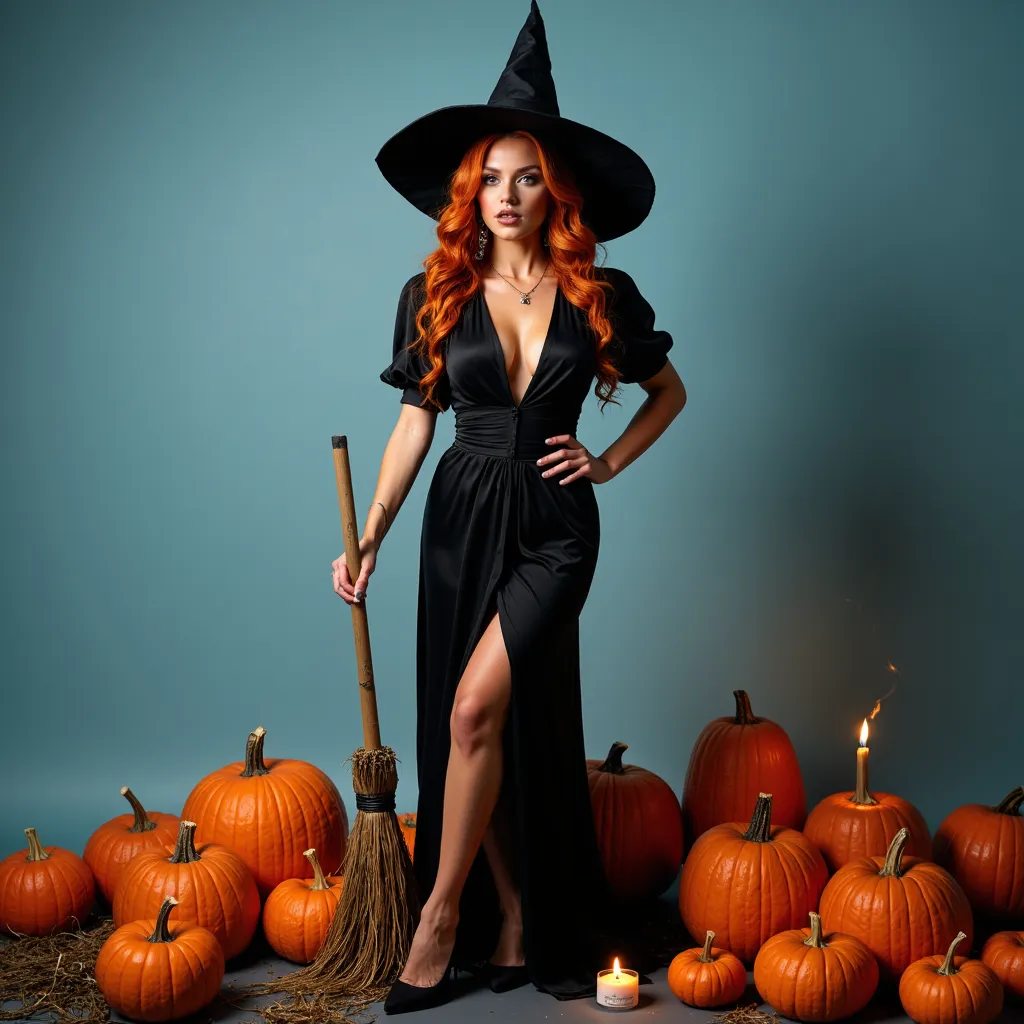
Noir witch, or horror in black lace

Speaking of ladies you shouldn’t wake up, it’s time for the witch. Cinema has more witches than pumpkins in October, but the most famous is probably the Wicked Witch of the West from “The Wizard of Oz” (1939). Margaret Hamilton, who played her, badly burned her face and hand during the scene where she vanishes in flames, which is why my witch has only used battery-operated candles for years. The Sanderson sisters from “Hocus Pocus” returned to the screen after nearly thirty years, and there are also “The Witches of Eastwick,” the high-school-set “The Craft,” and “Wicked,” where the green witch finally tells her own version of the story. Polish cinemas even had two completely different films titled “Czarownica” (Witch). In 2014, “Maleficent” with Angelina Jolie was released under this title, and a year later came Robert Eggers’ dark horror with Anya Taylor-Joy, known in Polish as “Czarownica: Bajka ludowa z Nowej Anglii” (“The VVitch: A New-England Folktale”). So at a Polish party you can safely say you’re from “Czarownica” and watch who guesses which one.

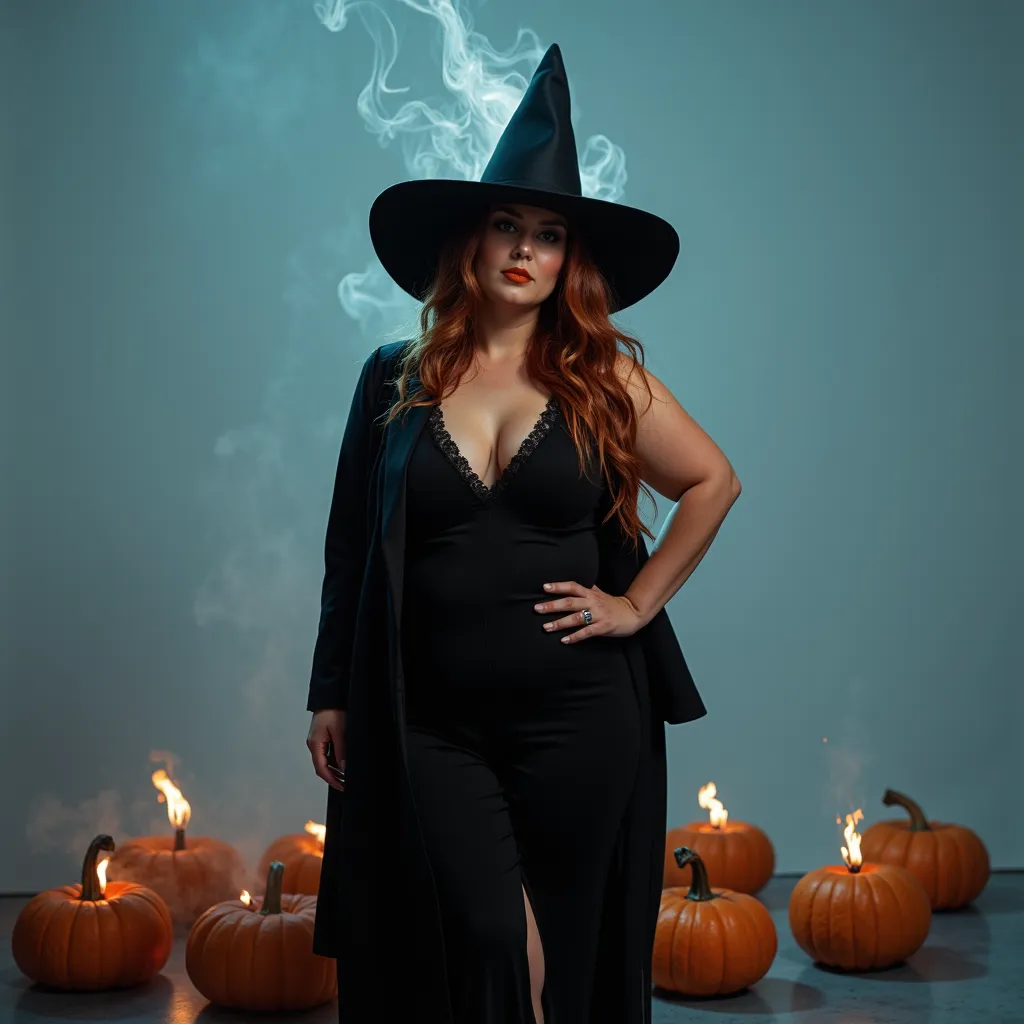
Our version is noir, and that word is the most important here. We’re not making an old crone with a wart on her nose, but a lady straight out of an old black-and-white film, in a wide-brimmed hat, black lace, and a long dress, with heavily emphasized lips. It should be elegant and slightly menacing. You can make the hat from cardboard. Cut out a circle about half a meter in diameter with a hole for the head, subtracting one or two centimeters from the circumference, and roll a cone from a quarter of a large circle. Cut its bottom edge into teeth, fold them, and glue them from the underside to the brim, then cover the whole thing with black fabric from an old skirt or sweater. A slightly crumpled tip looks better than a perfect one.

A long black skirt and a black top are enough for the dress, and if you still have a tulle petticoat from your studniówka (Polish high school prom), it will finally come in handy. You can make lace from an old curtain dyed black; one package of fabric dye from a drugstore is enough, and you can turn it into a shawl, sleeves, or a train. Don’t throw away black tights with a run either, because the cut-off legs make great fingerless gloves. You can twist a spider-shaped brooch from black pipe cleaners, use an old book covered in gray paper as a spellbook, and the broom is standing on the balcony anyway. The makeup is a smoky eye in black and graphite brown, defined cheekbones, and lips in dark plum or classic red—nothing you wouldn’t already have in your makeup bag. For photos, sit low among the pumpkins and candles, and spread the train around you, because warm light beautifully highlights facial features. You’ll spend at most PLN 30, but you’ll look like a million dollars.

Frankenstein – madness from the lab

It’s an easy jump from witches to the most famous horror story ever written by a woman. Mary Shelley started “Frankenstein” when she was eighteen, during the summer of 1816, which went down in history as the year without a summer. After the eruption of Mount Tambora, clouds hung over Europe and rain fell endlessly, so a group of friends, including Lord Byron, got stuck in a villa on Lake Geneva and held a contest for the scariest story. Mary didn’t just win it; she invented science fiction in the process. Remember that villa, because my colleague will come back to it. And here’s one more thing you can brag about at a party, but only once: Frankenstein is the scientist’s last name, not the monster’s, because the Creature in the novel doesn’t have a name at all.

Cinema quickly took up this story. Boris Karloff gave the monster a flat head and bolts in his neck in the 1931 “Frankenstein,” and four years later Elsa Lanchester got the most famous hairstyle in horror history in “Bride of Frankenstein”: a high bun cut through by white lightning bolts. She’s on screen for barely a few minutes and doesn’t say a word, only hisses, a sound she reportedly picked up from swans in a London park. In the prologue of that same film, she actually played Mary Shelley herself. Then came Mel Brooks’ parody “Young Frankenstein,” “Poor Things” with an Oscar-winning role for Emma Stone, “Frankenstein” by Guillermo del Toro with Jacob Elordi as the Creature, and in 2026 “The Bride!” by Maggie Gyllenhaal with Jessie Buckley as the Bride.

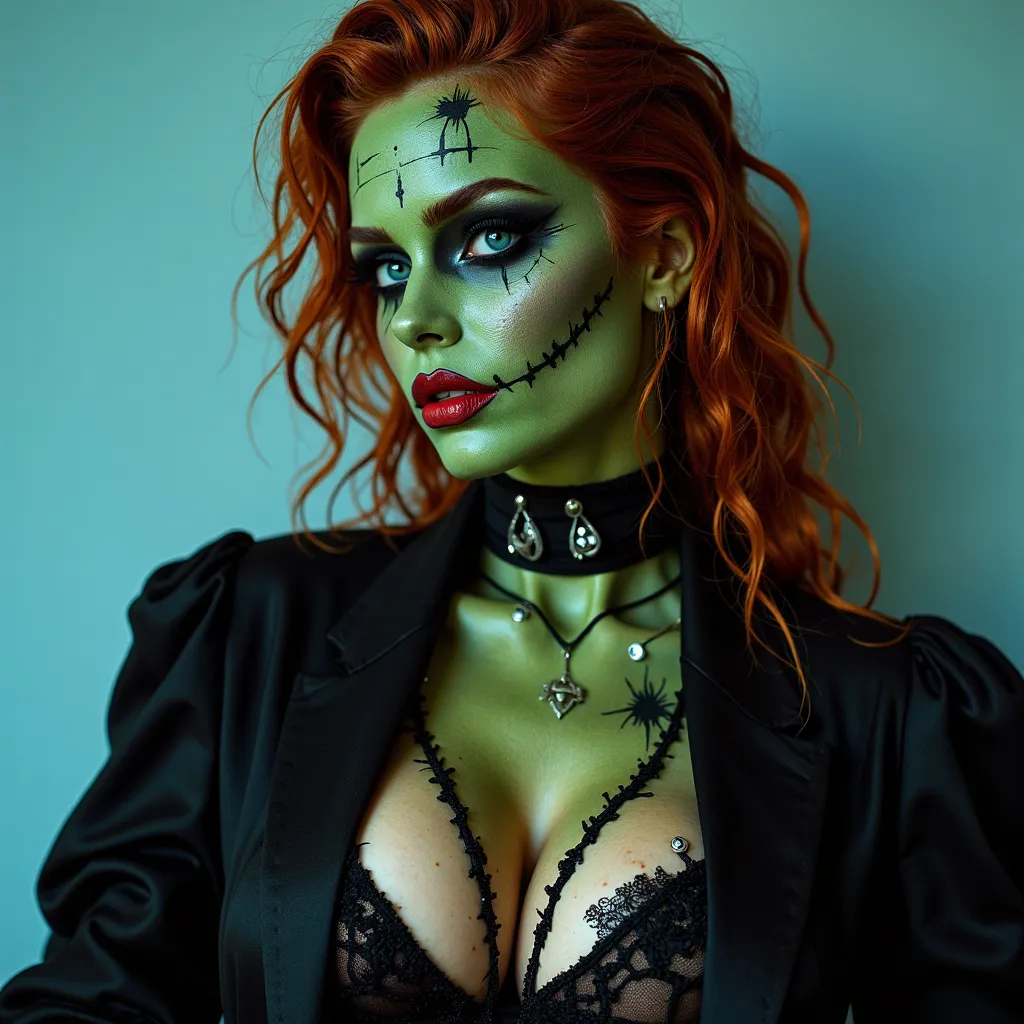
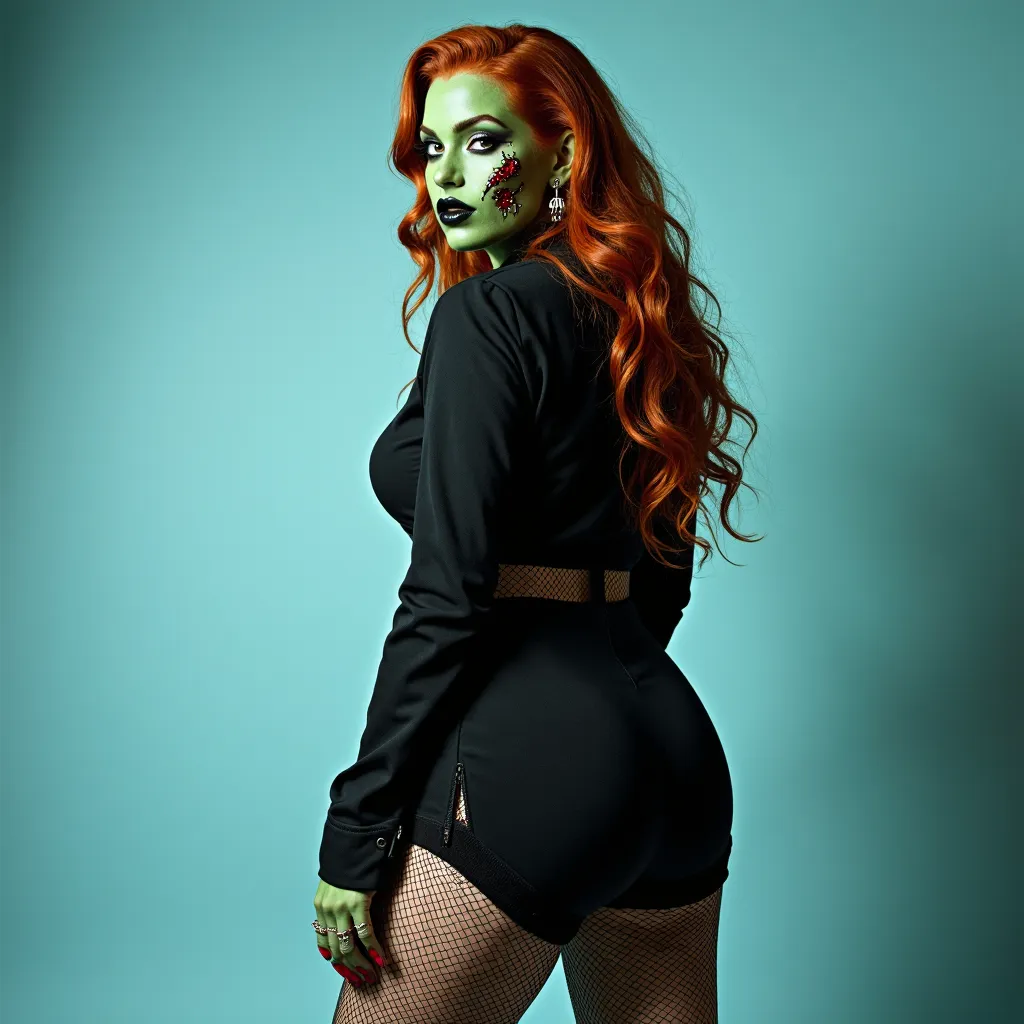
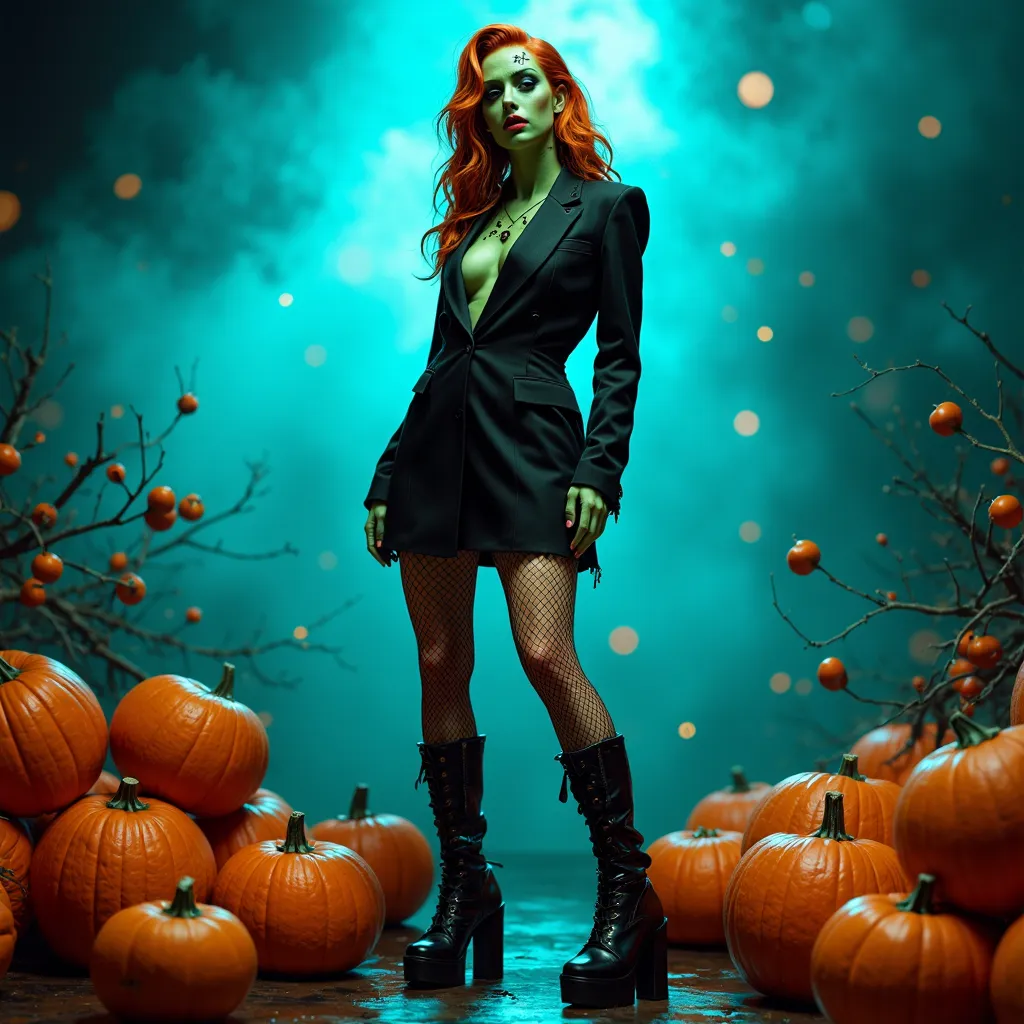
Our version is something between the Creature and a mad scientist. Green skin, because who wouldn’t want to look like a potted plant at least once, stitches, wild hair, and a tailcoat over a white shirt, elegant but clearly after a few failed experiments. You can make the tailcoat from a dark blazer from your dad’s closet or from a lumpeks (second-hand shop), pinning two long triangles of black fabric to the inside with safety pins. You can cut one sleeve and sew it back together with thick white thread, using large stitches. Underneath, wear a white shirt, preferably men’s and a bit oversized, with a popped collar and cuffs sticking out from the sleeves. For the neck, use a black ribbon or a strap from an old handbag with two large nuts, metal ones or plastic bottle caps, painted with silver nail polish. These are the movie electrodes, and everyone will recognize you by them.

Start the face with moisturizer, on which you apply matte green eyeshadow or green face paint with a sponge, also on the neck and hands. Use gray shadow to darken the hollows under the cheekbones, temples, and around the eyes. Draw stitches with a dark pencil as a single line with short cross-hatches, and lightly smudge burgundy shadow around them so the wound looks fresh. Paint your lips dark purple. Tease your hair with a comb from the roots, add dry shampoo and hairspray, and if you prefer the Bride version, pin up a high bun on a paper roll or a rolled-up sock and paint two white streaks on it. For photos, ask someone to use a hairdryer on a cold setting, because wild hair is half of the mad-lab look. The whole costume costs as much as green eyeshadow or face paint, so a few złoty, PLN 20 at most.

Catrina’s beautiful skull

For the finale, I saved the look that will have you sitting with a brush for the longest time, but the result is worth every minute. The skeletal makeup in the spirit of Catrina doesn’t come from Halloween, but from Mexico’s Día de Muertos, the Day of the Dead celebrated on November 1st and 2nd. It’s a joyful holiday of remembrance, during which families build altars in their homes with flowers, photos, and their loved ones’ favorite dishes. It sounds familiar, because we have Zaduszki (All Souls’ Day) and a sea of memorial candles. The idea is similar, just the temperament is different. Catrina herself, the elegant skeleton lady in a flower-adorned hat, started as satire. In the early 20th century, illustrator José Guadalupe Posada drew a skull mocking Mexicans who pretended to be European aristocrats, and Diego Rivera later gave her the name and outfit in his famous 1947 mural. Pixar showed this holiday most beautifully in “Coco,” and if you didn’t cry at the finale, check your pulse. Before that, there was the colorful animated “The Book of Life,” and James Bond opened “Spectre” with a massive Day of the Dead parade in Mexico City. Interestingly, such a parade didn’t exist there before. Filmmakers invented it, and since 2016, a real procession has marched through the city streets every year, inspired by the Bond scene.

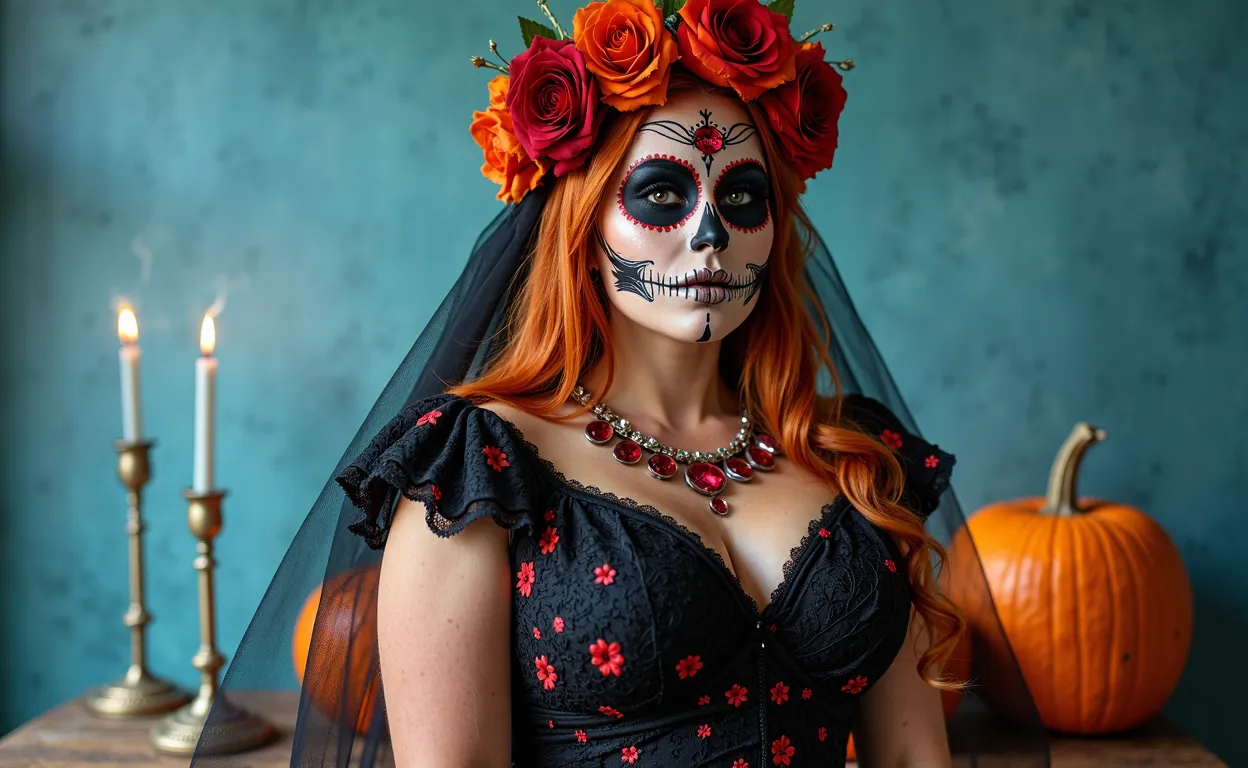
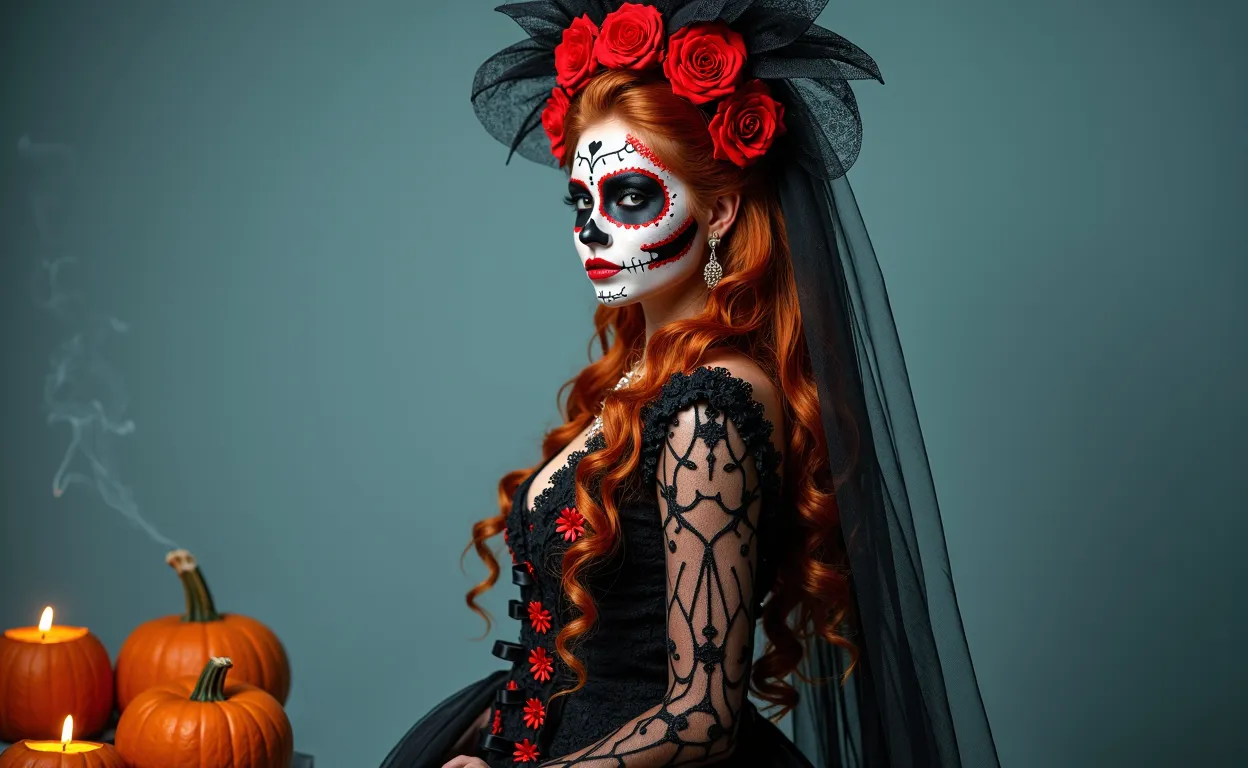
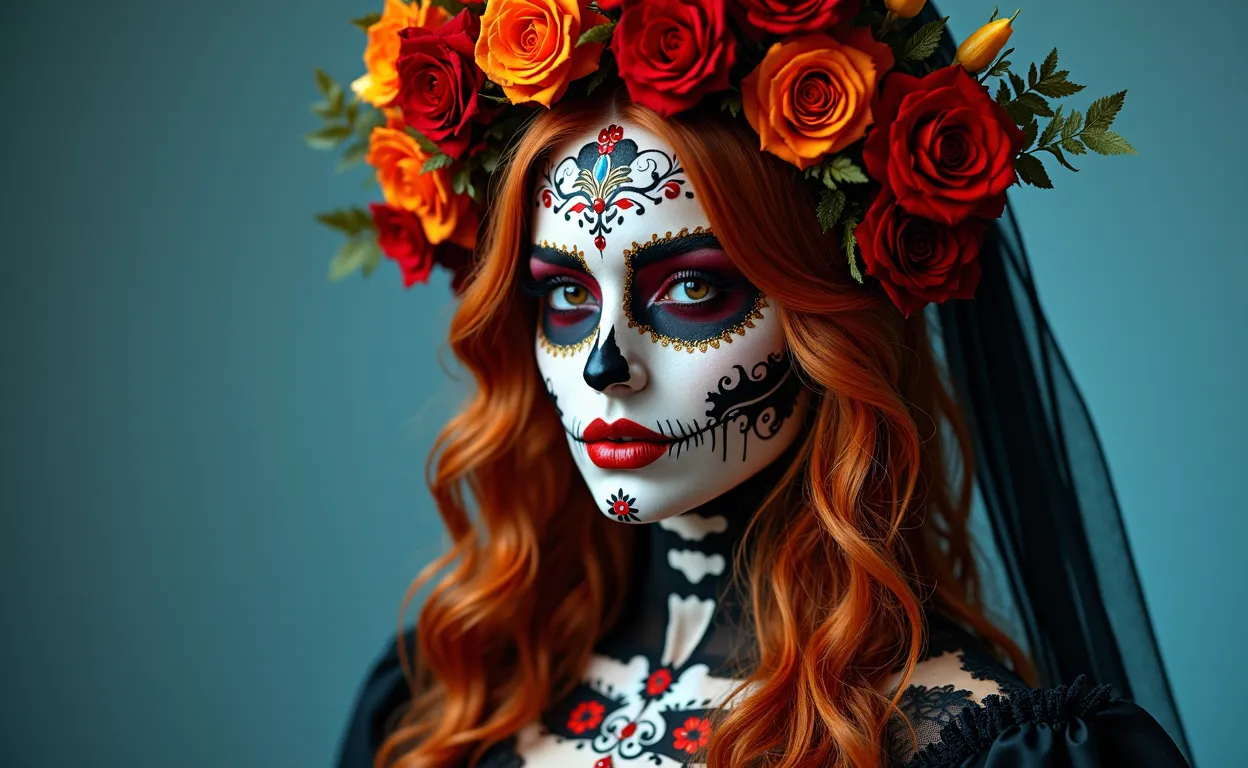
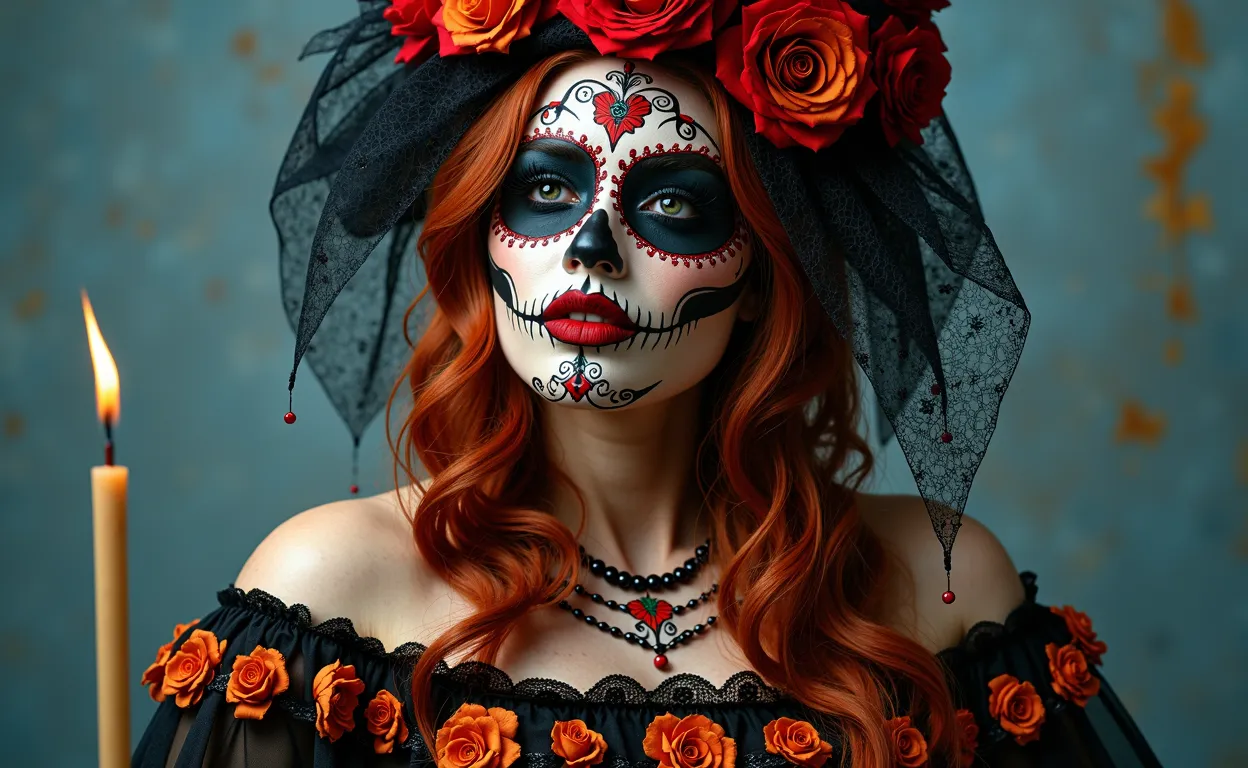
So we paint a skull, but a beautiful one, not scary, with flowers, ornaments, a wreath of roses, and a black veil. It’s a nod to a living tradition, so it’s worth doing with respect, elegance, and no silliness. You can make the wreath from artificial roses from old decorations or from crepe paper flowers, the kind made in every school back in the day, glued with hot glue to a plastic headband or a wire hanger hoop. Under it, pin a piece of black tulle or dyed curtain fabric with hairpins, which also looks nice draped over a coat on the way to the party. Add a black dress, preferably floral or with ruffles at the shoulders, big red beads, and earrings from grandma’s jewelry box. Modesty doesn’t fit here.

The makeup will take about an hour, so practice it once beforehand. Start with a white base, either face paint or a very light foundation set with white shadow pressed in with a damp sponge. Around the eyes, draw large black circles or a wreath of colorful petals, an inverted black heart on the tip of the nose, and a black line through the center of the lips extending onto the cheeks, crossed by short vertical lines that mimic teeth. Decorate the rest of the face with dots, swirls, and petals drawn with colored pencils or shadows, and finally, use eyelash glue to stick on a few red crystals from broken jewelry. Before you start, sketch it on paper, because symmetry is what makes the whole effect. Throw a black pencil and cotton swabs into your bag, because someone will eventually hug you, and you don’t want to look like a panda at 10 PM. White paint costs PLN 20 to PLN 30, and you’ll find the rest at home. And that’s all, darling. Have fun, and now I’m handing over to my colleague, because the guys need to dress up as something too.

Count Dracula, or manners from a five-star hotel

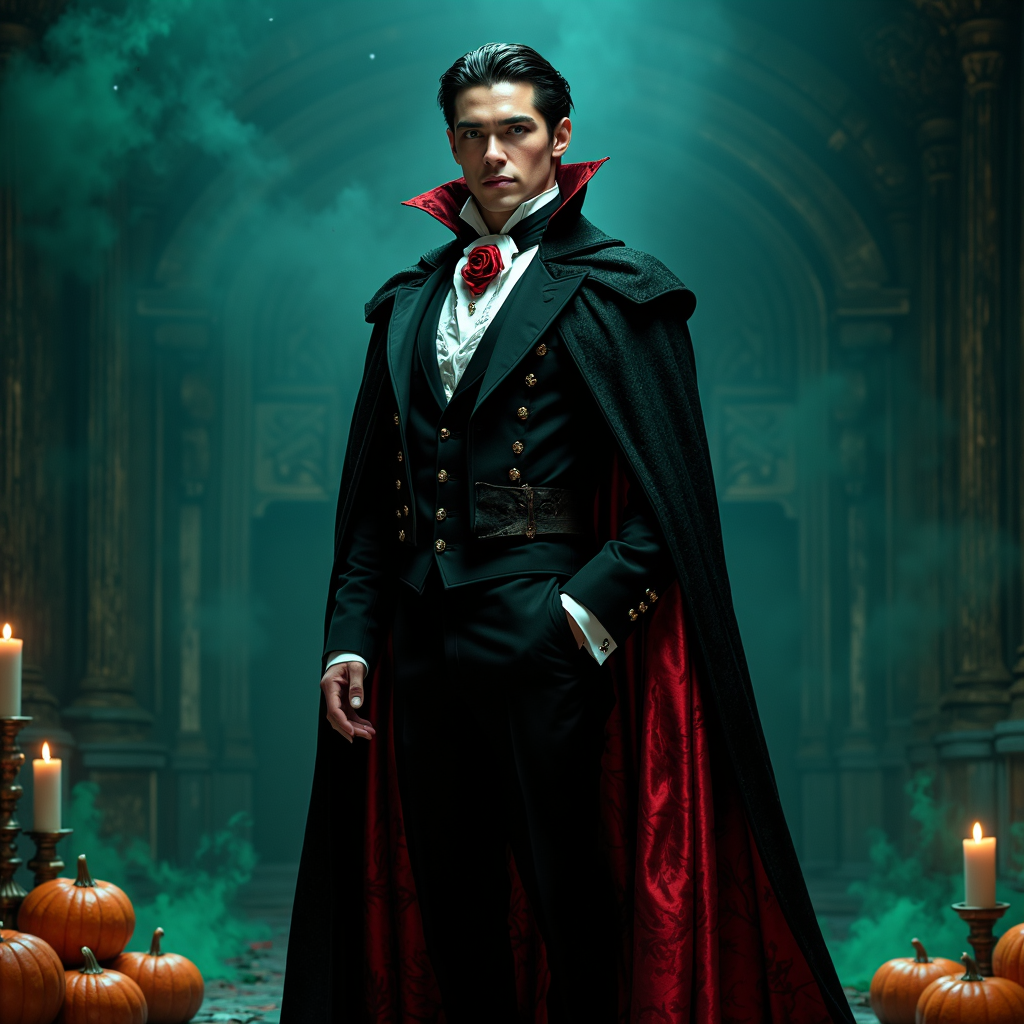
Count Dracula in a tailcoat and cape with red lining, near candles and pumpkins

Look, I know. You’d probably rather just show up in a hoodie and tell everyone you’re dressed as yourself on Monday. Not this time. The good news is that guys have it easier on Halloween than they think, because you don’t need to know how to sew or paint, and you don’t need to look like you stepped off the cover of “Vogue.” What counts is the idea and the fact that you bothered at all. There’s only one rule: if you’re going to dress up, go all in. A half-hearted Dracula is just a guy in a cape, so stay in character longer than until your first beer. And since we’re talking about Dracula, let’s start with him, because everything started with him.

Bram Stoker’s novel came out in 1897, and the writer borrowed the count’s name from Vlad the Impaler, the cruel ruler of Wallachia. Cinema loved Dracula right away, though not always legally. The German “Nosferatu: A Symphony of Horror” from 1922 was an unauthorized adaptation of the novel; Stoker’s widow won the lawsuit, and the court ordered the film copies destroyed. A few luckily survived, and in 2024 Robert Eggers made a new “Nosferatu” with Bill Skarsgård. The look everyone associates with him was cemented by Bela Lugosi in “Dracula” from 1931: slicked-back hair, a cape, and manners like a five-star hotel waiter. Lugosi became so identified with the role that he was buried in the count’s cape. After him came Christopher Lee in Hammer horror films and Gary Oldman in “Bram Stoker’s Dracula,” whose costumes Eiko Ishioka designed, winning an Oscar for them. My colleague told you about the villa on Lake Geneva. That is exactly where the elegant vampire comes from. At the same contest, Byron’s doctor, John Polidori, took an idea Byron had abandoned and turned it into the story “The Vampyre,” whose protagonist, a pale and seductive lord, looks exactly how cinema loved him a hundred years later. And if someone tells you vampires are an American import, remind them about the Slavic strzyga and upiór, vampire-like creatures from Polish folklore. The Witcher didn’t fight pumpkins, after all.

Dracula doesn’t run around like a maniac, he glides. He has slow movements, an upright posture, and a gaze that gives you chills, plus a tailcoat, waistcoat, jabot, and a cape with a red lining. You can make the cape from an old black curtain, a duvet cover, or a flared skirt, and don’t laugh, because you fasten the waistband under your chin and no one will notice. You can sew or glue the lining from an old red pillowcase. The most important thing is the high collar, which supposedly originated in the theater. In the stage version from the 1920s, it hid the back of the actor’s head so he could sneak out of the cape through a trapdoor, and the audience thought the count had vanished into thin air. You’ll cut your collar from cardboard or a plastic document folder, cover it with fabric, red on the inside, and attach it to the cape with a stapler. It has to stand on its own, otherwise you look like a duck. You’ll fasten the cape with two large buttons and a piece of chain from an old handbag. Take the tailcoat and waistcoat from a suit that remembers your studniówka (Polish high school prom) or your cousin’s wedding, and arrange the jabot under your neck from a white handkerchief or a piece of lace, fastening it with a brooch made from a bottle cap painted with red nail polish.

Slick your hair back with a lot of gel. Powder one shade lighter than your skin will make you pale as a basement wall, and a bit of gray shadow under your eyes and cheekbones adds aristocratic fatigue. Fangs are optional. Cheap plastic ones look great in photos and terrible in conversation, so keep them in your pocket for the photo session. Instead, learn one line from 1931, “I never drink… wine,” and say it slowly, with a pause, looking the person in the eyes. For photos, light from below is enough, i.e., a phone flashlight held at chest height. You can pull this off for PLN 20, and if you have an old suit, you won’t spend a cent.


Flannel mid-transformation, or the werewolf

If a cape feels too fancy for you, werewolf is the way to go. Stories about people turning into wolves exist in almost every culture, and the Slavic werewolf is a regular fixture in Polish folklore. Cinema, however, made it a star—specifically “The Wolf Man” from 1941, starring Lon Chaney Jr. Screenwriter Curt Siodmak added a verse to the legend stating that even a pure-hearted man can become a werewolf when wolfsbane blooms and the autumn moon shines bright, plus a few rules we now accept as old folklore. Anyone who grew up in the eighties remembers “An American Werewolf in London” and “Teen Wolf” with Michael J. Fox, while younger fans know Jacob from “Twilight,” who probably never put on a shirt. The transformation in “An American Werewolf in London” was done without computers, using mechanical prosthetics and latex, and its creator, Rick Baker, won the first-ever Oscar for makeup for it. Remember that name, because it will come up again soon.

Our werewolf is mid-transformation. He’s still wearing a lumberjack’s flannel shirt, but fur is already poking out from the cuffs, his nose has turned black, and his nails look suspiciously dark. Grab a plaid flannel shirt you haven’t worn in three seasons, tear apart its cuffs and hem, pull the threads to make them fray, and wear a dark T-shirt underneath. You can find fur in the collar of an old jacket, the hood lining, an old stuffed animal, or in slippers the dog didn’t quite finish off. Sew or glue strips of fur inside the sleeves so they stick out from the cuffs, and add a bit at the neckline. Ears are two cardboard triangles covered in fur or brown felt, hot-glued to a headband you borrow from your sister or girlfriend and return in one piece. Distress the jeans at the knees with a grater or sandpaper, because werewolves don’t wear new clothes.

Paint the tip of your nose and the line from nose to upper lip black with eyeliner or face paint. Darken the eye area with brown and gray eyeshadow, and use an eyebrow pencil to sketch sideburns and stubble with short strokes—or just mess up your beard if you have one. Paint your nails with black polish, which you’ll wash off before work in the morning. Yellow eyes are impressive, but colored contact lenses should only be fitted by an optician; without them, you can manage with a yellowish-brown eyeshadow smudged just under the lower lash line. Posture is key, because a werewolf never stands straight. Lean forward, spread your arms, and show your teeth. You’ll spend no more than PLN 15.

Werewolf mid-transformation: plaid flannel shirt, furry ears, moon in the background

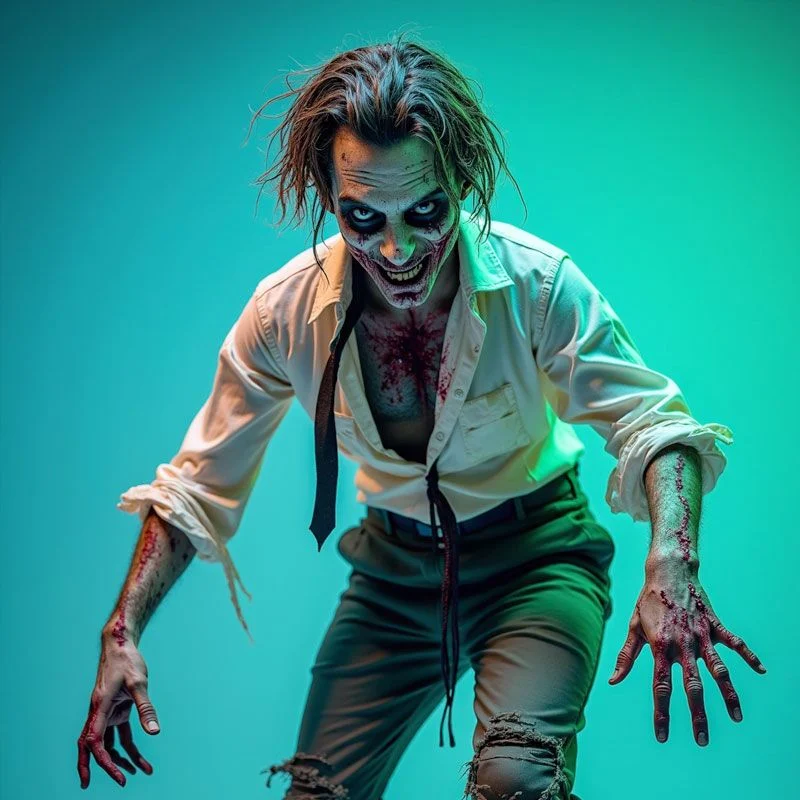
Zombie – second from the left

Zombie in an unbuttoned white shirt and loose tie, with skin wounds

Rick Baker, the guy behind the werewolf, teamed up with director John Landis two years later to create the zombies for Michael Jackson’s “Thriller,” so we’re smoothly transitioning to the living dead. The first feature-length zombie film was “White Zombie” from 1932, starring Bela Lugosi, the same actor known for Dracula. However, the zombies as we know them today—slow, hungry, and moving in herds—were invented by George A. Romero in “Night of the Living Dead” from 1968. Interestingly, the word “zombie” is never mentioned in the film; the characters refer to them as ghouls, and the blood on the black-and-white film strip is just chocolate syrup. When the title was changed, the distributor forgot to include copyright information on the copies, so the film fell into the public domain. Anyone could legally screen it, making it one of the most frequently shown horror films in history. Then came “Dawn of the Dead,” the comedy “Shaun of the Dead,” the fast and furious infected from “28 Days Later” and “28 Years Later,” the Korean “Train to Busan,” and the series “The Walking Dead” and “The Last of Us.” The crew of “The Walking Dead” even ran a “zombie school” for extras, teaching them how to walk, move their heads, and avoid looking like an actor pretending to be a zombie.

Our zombie isn’t a movie star. It’s just an ordinary corpse from the crowd, the second one from the left, who was heading to the office for coffee that morning. He has an unbuttoned white shirt, a loosened tie, torn pants, and skin that looks like it survived a very, very bad week. This is the simplest costume I know, and it always works. You need a white shirt you were already planning to throw away, a tie from your dad or from a thrift store, and old suit pants. Rip the pants at the knees, unbutton the shirt, tear off one button, unevenly roll up the sleeves, and rub the whole outfit with coffee grounds, cold tea, and gray shadow. A bit of soil from a flowerpot is useful too, just not in the living room. You can make blood from two tablespoons of honey or syrup, a few drops of red food coloring, and a pinch of cocoa powder, which thickens the mixture and darkens the color. If it looks too raspberry-like, add a drop of blue or green food coloring. This blood is edible, but it sticks like crazy and stains fabrics, so apply it to clothes that are going to the trash, not to the hosts’ couch.

Powder your face, neck, and hands with light powder, then use gray, purple, and a touch of green shadow to darken the eyes, the hollows under the cheekbones, and the temples to make them look sunken. Draw a few veins on the neck with a purple pencil. The most fun part is the wound made from toilet paper. Apply a thin layer of eyelash glue to the skin, attach a single layer of paper, let it dry, and repeat this two more times. Then tear the center open with tweezers, powder the edges, paint the inside with burgundy shadow, and add a drop of fake blood. But the costume is only half the success; the other half is the walk. Drag one leg as if you’ve just finished a marathon, keep your head slightly tilted, let your arms hang loose, and don’t overdo the growling, because silence and slowness are scarier. If you want an advanced version, grab your phone and livestream from the afterlife. Everything together costs at most PLN 10.

A sack and silence – for the chatty ones

Finally, something for those who hate dancing and chatting at parties. A potato sack with eye holes cut out is one of the oldest and cheapest symbols of horror cinema. It was worn by the mysterious “Phantom” in the 1976 film “The Town That Dreaded Sundown,” based on real crimes in Texas, and by Jason Voorhees in the second “Friday the 13th,” before he got his famous hockey mask in the third. One of the intruders in “The Strangers” also wears it, as does Scarecrow, played by Cillian Murphy in “Batman Begins.” The most famous horror mask, incidentally, cost next to nothing. Michael Myers’ face in the 1978 “Halloween” is a cheap Captain Kirk mask from “Star Trek,” painted white, with widened eye holes. This entire genre is called slasher, and researcher Carol J. Clover coined the term “final girl” for it—the girl who is the only one to survive until the end credits. So you already know who not to bother at a party.

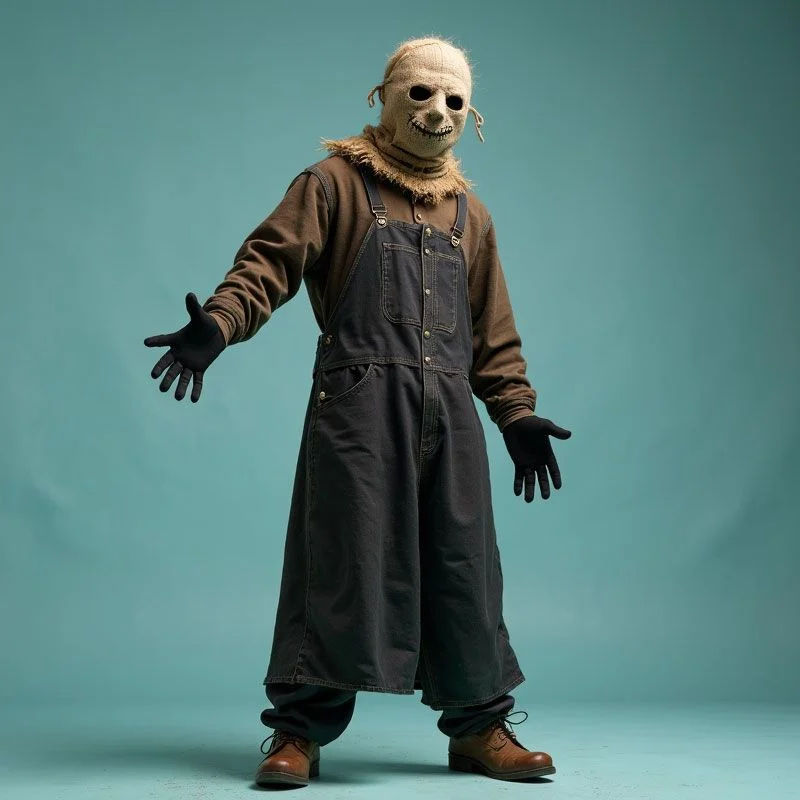
This character needs no words or movement. A sack on the head, Grandpa’s overalls, a sweater the color of rotten cabbage, and work gloves. You stand still in the half-dark, and that’s enough, so it’s the perfect costume for an introvert, because no one expects you to entertain the company. Take a jute sack for potatoes or a jute shopping bag and wash it first, because jute that held vegetables sheds dust. Put it on, mark the eye spots with chalk, take it off, and cut the holes—small, but big enough so you can see well. Embroider crooked stitches in the mouth area with thick red or black yarn, and sew an old cotton cap inside, because jute scratches like crazy, and you have to last a few hours in it. Tie the sack around the neck with jute string, loosely, just for decoration. Add work overalls or a jumpsuit from a thrift store, a thick brown sweater, garage gloves, and heavy boots that have seen better days. It’s warm and comfortable, so an October evening won’t scare you.

You don’t need props. Leave the tools in the shed, even the plastic ones, because this character scares through stillness. Stand in a corner where the light barely reaches, and wait for someone to notice you. Take the mask off on the stairs, for eating, and for group photos, and carry it in a bag on the way to the party, because on the bus you just look silly in it. The whole thing costs from zero to PLN 20.

Masked killer with a burlap sack on his head, overalls, and work gloves

After the party

Did you come home looking like a victim of a paint factory accident? Don’t worry, you don’t need to call a 2 a.m. beauty emergency hotline. Face paint and heavy makeup come off best with oil, whether baby oil, cleansing oil or plain olive oil, because it dissolves the paint more gently than scrubbing; wash your face with a cleanser only after that. Don’t peel off eyelash glue or paper wounds. Soak them in oil, wait a moment, and they’ll come off like butter. Wash fake blood off with warm water and mild soap, because honey and syrup dissolve in water, and the delicate pink tint from the dye will disappear with the next wash. Rinse your clothes first with cold water and a drop of dish soap, and only then put them in the washing machine, because hot water sets dye stains permanently. If your skin burns, itches, or turns red, stop and show it to a pharmacist.

If you’ve got a costume left over from the party and a free evening on the calendar, put together a movie marathon featuring the films your characters came from. Start with something tongue-in-cheek to warm up: “The Mummy” with Brendan Fraser, “Hocus Pocus”, “Young Frankenstein”, or “Shaun of the Dead”. Then move on to the classics you should know, from “Frankenstein” and “Bride of Frankenstein” through Lugosi’s “Dracula” and “The Wolf Man” to “Night of the Living Dead”. If you want to stay up until dawn, go for “The VVitch: A New-England Folktale”, where the devil really is in the details, the new “Nosferatu” or “28 Days Later”. And of course “Halloween”, but watch out for Michael Myers, because he’s like an ex: you never know when he’ll come back. To wrap things up, we recommend “Coco”, because after a night with monsters, you deserve a little tenderness.

Turn off the lights, make some popcorn, and park your costumed friends on the couch. It all started in the cinema, after all, and it’s most pleasant to end there too. For tips on how to set up such an evening in a truly cinematic atmosphere, check out our page on A horror marathon on 100 inches.

Note: AI – the costume photos in this article were generated using artificial intelligence.

Product added to wishlist